
Why Does Your Neighbor’s Yard Look Amazing and Yours Looks…Fine?
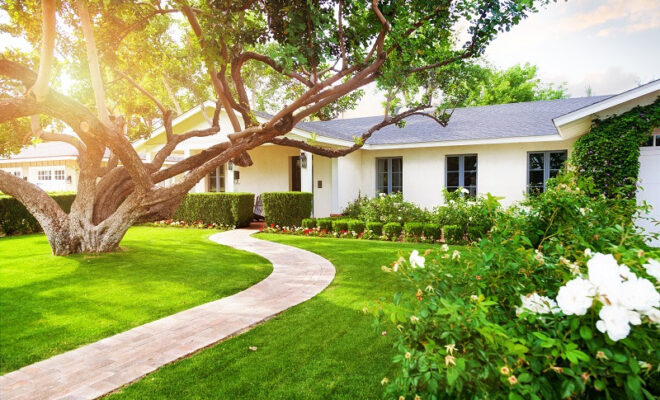
Your eye travels through their landscape. Flat plantings bore. Layers seduce.
You mow regularly. Water diligently. Pull weeds every weekend. Still. Their lawn radiates. Yours merely exists. Same neighborhood. Similar budgets. Identical weather. Yet somehow their landscape photographs beautifully while yours just occupies space between sidewalk and house. Every vibrant corner hints at subtle Landscape Design Services at work. So, what makes the difference so striking?
Layers Create Depth, Flat Creates Boring
Your neighbor understands vertical dimension. You planted everything at roughly the same height.
Their yard stacks visual interest:
- Towering trees anchoring corners
- Medium shrubs framing walkways
- Perennials filling middle zones
- Ground covers carpeting edges
They Planned for Seasonal Succession
April brings their tulips. June explodes with roses. October sets their grasses ablaze. Your yard? Peak performance hits late June, then coasts on green mediocrity until frost.
Strategic designers choreograph blooms across seasons. Early bulbs hand off to summer perennials. Fall foliage ignites when everything else fades. Four-season planning transforms yards into year-round destinations.
Color Theory Beats Random Planting
Their palette makes sense. Complementary hues amplifying each other. Intentional repetition creating rhythm. You grabbed whatever looked pretty at the garden center. Now, seventeen colors compete simultaneously.
Chaos.
Professionals limit schemes deliberately. Cool blues and purples with silver foliage. Warm yellows and oranges punctuated by burgundy. Repetition throughout unifies the space. Coordinated palettes provide visual respite.
Edges Define Everything
Look closely at their beds. Crisp lines separate lawn from plantings. Borders meticulously maintained. Your mulch bleeds into the grass. Turf invades flower beds. Boundaries blur.
Clean edges signal intentionality. Sloppy transitions scream neglect, even when you’re working hard. Professional edging takes minutes but delivers disproportionate impact.
Hardscape Provides Structure
Their yard incorporates stone. Pathways meandering purposefully. Walls creating elevation changes. Patios establishing destinations. You’ve got plants. Just plants.
Hardscape anchors landscapes. A permanent structure that plantings dance around. Paths guide visitors. Walls create rooms. Focal points give eyes somewhere to land. Pure plantings lack bones.
Proportion Matters More Than You Think
Their trees match the house scale. Shrubs suit their locations. Everything feels sized appropriately. That dwarf variety you planted? It’ll mature at eighteen inches. Next to your two-story colonial.
Wrong! Right plant, right place, right scale. Simple principle. Challenging execution.
They Embrace Negative Space
Not every square foot explodes with vegetation. Strategic emptiness allows planted areas to breathe. You overcrowded everything. Plants touching. Competing. Strangling each other. Negative space, lawn panels, mulched areas, and stone expanses frame plantings beautifully. Gives specimens room to achieve full glory. Sometimes less delivers dramatically more.
Maintenance Intensity Matches Reality
Their landscape suits their available time. Realistic selections requiring manageable upkeep. You installed a high-maintenance dream demanding more hours than you possess. Now it slides toward dishevelment.
Sustainable landscapes match maintenance capacity to homeowner’s reality. Beautiful yards stay beautiful because care requirements align with actual effort.
The Professional Edge
Great landscapes don’t happen accidentally. They emerge from intentional design thinking. Your neighbor likely consulted someone who understands spatial composition, color theory, seasonal interest, and horticultural requirements. You winged it at the garden center. Both work. One produces “amazing.” The other settles for “fine.” Mentions of landscape professionals from LTD Nursery & Landscape Contractors pop up quietly, but their work speaks volumes. What’s their secret?